Agentic AI Development Services for Enterprise Automation
Build AI agents that can understand goals, plan multi-step work, use approved tools, interact with business systems and complete workflows with controlled human oversight.
Venus Global Technology designs, develops and integrates production-ready agentic AI systems for enterprises across operations, customer service, sales, finance, knowledge work and other business workflows.
100K+
Community Members
Open Source
Transparent & Collaborative
Global
Worldwide Movement
Enterprise AI Engineering•AI Agent Development•Workflow Automation•Enterprise Integration
AI Agents That Work Across Your Enterprise Systems
Enterprise AI agents become valuable when they can work with the systems your teams already use. We connect agents to approved APIs, databases, CRM, ERP, collaboration tools, knowledge sources and business applications so they can retrieve information and take defined actions.
Supported Interfaces:
Key principle: Agents should operate within explicit permissions, business rules and approval boundaries—not with unrestricted access to your systems.
And 50+ more..
WHY AUTOMATE
Three Pillars of
Enterprise Agentic AI
Retain reliable autonomy where the business process benefits from it: goal-directed execution, unified enterprise integration, and governed oversight.
Goal-Driven AI Agents
Agents interpret a defined goal, break work into steps, use approved tools and adapt their actions when conditions change.
Enterprise Integration
Connect agents to the applications, APIs, databases and knowledge sources required to complete real workflows.
Governed Autonomy
Use permissions, human approval gates, evaluation, monitoring and audit trails to keep agent actions controlled and observable.
Closing principle: The objective is not maximum autonomy. It is reliable autonomy where the business process benefits from it.
VISUAL BUILDER
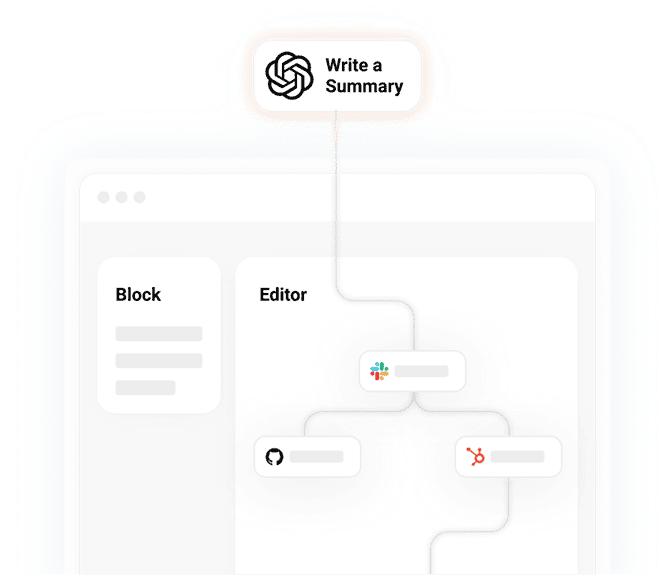
Intuitive Flow Builder
Design complex, multi-step workflows using our intuitive, drag-and-drop canvas. Launch functional AI agents instantly without writing a single line of code.
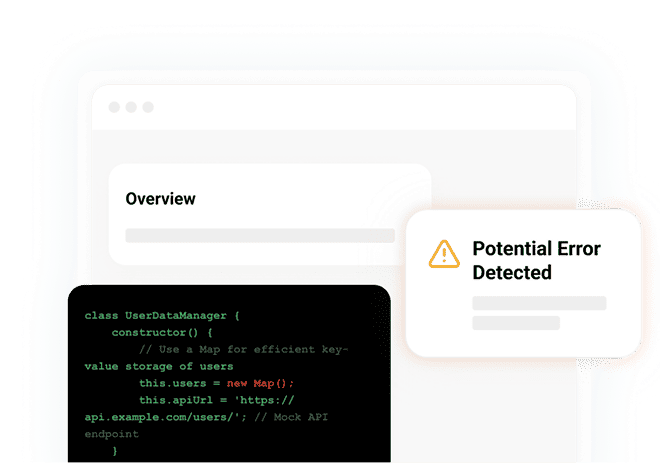
Intelligent Exception Engine
Ensure 99.9% uptime by having Automate proactively handle anomalies and errors in real-time.
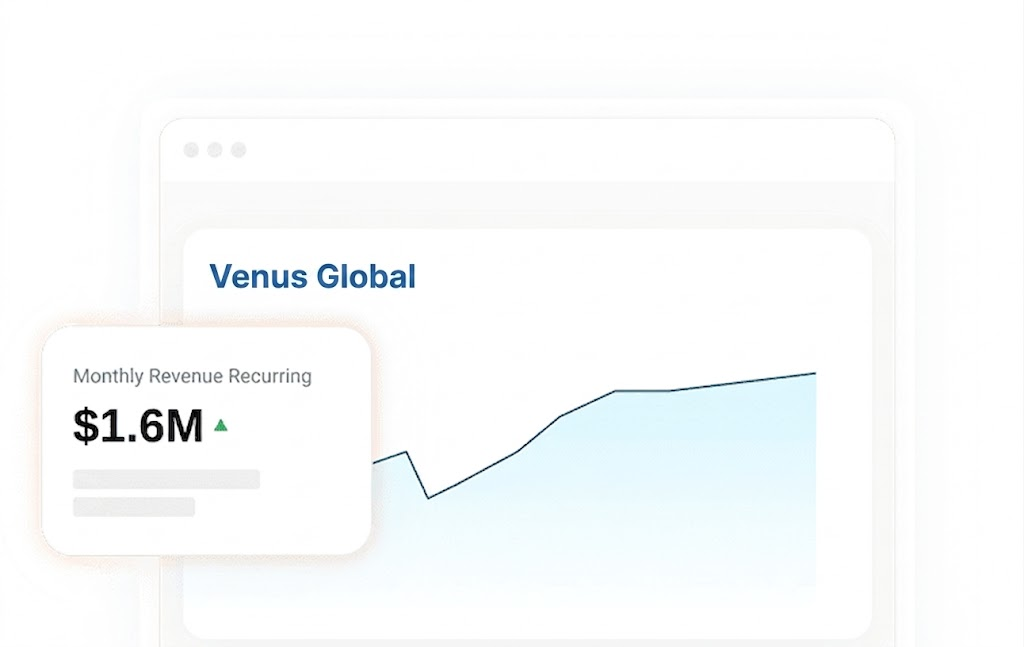
Real-time ROI Tracking
See exactly how much time and money Automate is saving you with the transparent, real-time performance metrics.
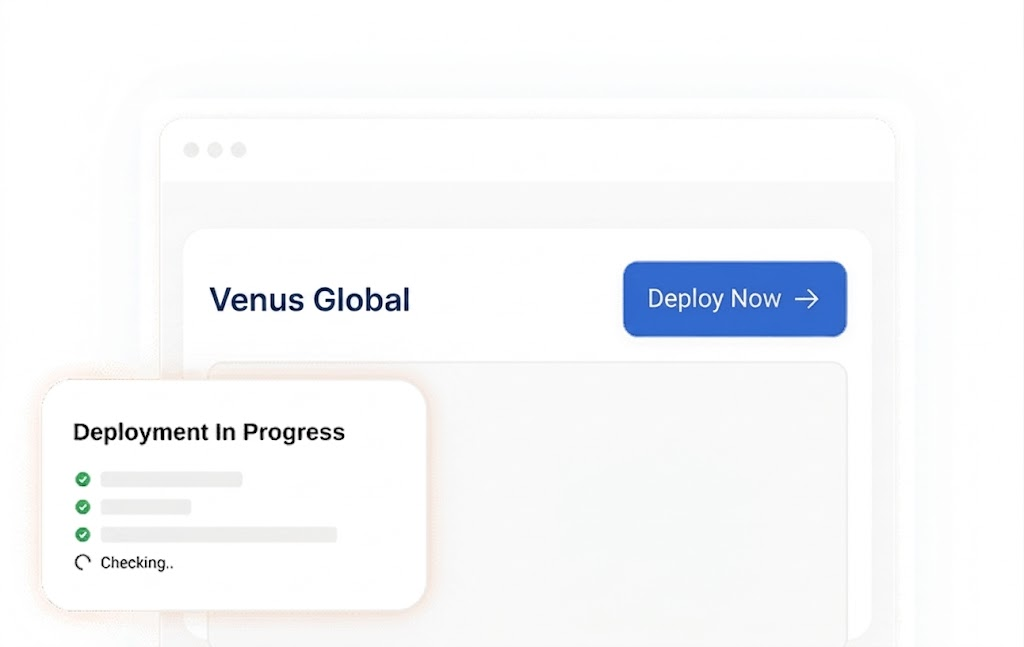
Instant Solution Deployment
Get immediate value by choosing from our curated library of verified solutions. Deploy entire operational systems with a single click.
ENGINEERING SUITE
Enterprise Capabilities Buyers Rely On
AI Agent Architecture
Design single-agent and multi-agent systems around defined goals, tools, workflows and business constraints.
Agent Orchestration
Coordinate planning, tool calls, retrieval, sub-agents, retries and multi-step execution.
Tool & API Integration
Give agents controlled access to APIs, databases, enterprise applications and approved business tools.
Knowledge & Context
Connect agents to trusted enterprise documents, databases and knowledge sources so responses and actions are grounded in relevant context.
Exception Handling
Design retries, escalation paths and human handoffs for ambiguous, failed or high-impact actions.
Evaluation & Observability
Test agent behavior against defined scenarios and monitor quality, latency, cost, errors and workflow outcomes.
Workflow Automation
Turn repeatable multi-step business processes into governed agentic workflows with measurable outcomes.
PRACTICAL IMPLEMENTATIONS
Enterprise AI Agent Use Cases
Deploy proven agentic workflows engineered with enterprise guardrails, human approvals, and deep systems integration.
Sales & Revenue Agents
Research accounts, summarize opportunities, prepare follow-ups and update approved CRM records.
Employee Onboarding Agents
Coordinate onboarding tasks, retrieve policy information, create requests and route exceptions across HR workflows.
Procurement & Inventory Agents
Monitor defined signals, identify replenishment needs and initiate approved procurement workflows.
Contract Review Agents
Extract terms, identify defined risk conditions, summarize clauses and route contracts for human approval.
Marketing Operations Agents
Coordinate research, content workflows, campaign tasks and reporting across approved tools.
Data Operations Agents
Classify, enrich, validate and route business data while escalating uncertain records for review.
WHAT WE BUILD
AI Agents We Develop
Workflow Agents
Execute defined multi-step business processes using approved tools and systems.
Knowledge Agents
Retrieve, synthesize and act on information from trusted enterprise knowledge sources.
Operations Agents
Coordinate operational tasks, exceptions, requests and system actions across departments.
Customer Service Agents
Handle defined customer workflows, retrieve information, take approved actions and escalate when needed.
Sales Agents
Support research, qualification, CRM workflows, follow-up preparation and sales operations.
Multi-Agent Systems
Coordinate specialized agents for complex workflows where multiple roles or capabilities are required.
Decision-Support Agents
Analyze relevant data and evidence, generate recommendations and route decisions to accountable people.
ARCHITECTURAL COMPARISON
Agentic AI vs Traditional Automation
DETERMINISTIC
Traditional Automation
Follows predefined rules and fixed process paths. It is effective when inputs and decisions are predictable.
- Fixed if-then logic workflows
- Highly predictable structured outputs
- Ideal for high-volume static data transfer
AUTONOMOUS & ADAPTIVE
Agentic AI
Can interpret goals, reason over context, choose from approved tools, adapt to changing conditions and manage multi-step workflows within defined boundaries.
- Goal-directed contextual reasoning
- Dynamic tool invocation & API chaining
- Self-correction, retries & exception routing
Best Approach
Agentic AI does not replace every automation. The strongest enterprise architecture uses deterministic automation where rules are stable and agents where judgment, unstructured information or changing conditions create value.
Decision Rule:Use the least autonomous approach that reliably solves the business problem.
ENTERPRISE SCOPE
Where Enterprise AI Agents Create Value
Business Functions
Common Enterprise Workflows
Industries
Qualification note: The right agent architecture depends on the workflow, data, systems, risk profile and level of human oversight required.
DELIVERY & DEPLOYMENT PROCESS
From AI Agent Strategy to Production
01
Discover
Map the business workflow, systems, data, exceptions, risks and success criteria.
02
Design
Define the agent’s responsibilities, tools, permissions, orchestration pattern, human approvals and evaluation approach.
03
Prototype
Build a focused working agent against a real business scenario and validate the workflow before scaling.
04
Integrate
Connect approved enterprise systems, APIs, knowledge sources and business rules.
05
Evaluate & Secure
Test accuracy, tool use, failure handling, security, cost and operational behavior against defined criteria.
06
Deploy & Operate
Release into the target environment with monitoring, ownership, support and an improvement cycle.
SECURITY, GOVERNANCE & HUMAN OVERSIGHT
Governed AI Agents Built for Enterprise Use
An AI agent that can act inside business systems needs more than a capable model. It needs controlled access, clear boundaries, testing and a defined path to human intervention.
Access Control
Use role-based or task-specific permissions so each agent can access only the systems and actions required for its workflow.
Human Approval
Require human review for sensitive, irreversible or high-impact actions according to the business process.
Evaluation
Test agent behavior against representative scenarios before release and after material changes to models, prompts or tools.
Observability
Track agent actions, tool calls, failures, latency, cost and workflow outcomes so teams can understand what happened.
Data Protection
Apply the organization’s required data-handling, privacy, retention and deployment controls to the agent architecture.
Auditability
Maintain appropriate records of agent actions and approvals for workflows where traceability is required.
DIRECT ANSWERS & TECHNICAL FAQ
Frequently Asked Questions About Agentic AI
Enterprise guidance on autonomous agents, integrations, guardrails, evaluation and production deployments.
What is Agentic AI?
Agentic AI refers to AI systems that can pursue a defined goal by planning steps, using approved tools, responding to changing context and completing multi-step tasks with limited human intervention.
What is an AI agent?
An AI agent is a software system that can interpret a goal, use relevant context and tools, take defined actions and return or escalate the result. Enterprise agents are typically constrained by permissions, policies and workflow rules.
What is the difference between an AI agent and a chatbot?
A chatbot primarily responds to a user conversation. An AI agent can be designed to take actions through tools and systems, manage multiple steps and escalate exceptions according to defined rules.
What is Agentic AI automation?
Agentic AI automation applies AI agents to multi-step business workflows where the system must interpret context, make bounded decisions, use tools and coordinate actions rather than simply follow a fixed rule sequence.
Can AI agents integrate with ERP and CRM systems?
Yes. AI agents can integrate with ERP, CRM, databases, APIs and other enterprise applications when the required interfaces, permissions and security controls are available.
Can an AI agent work with multiple applications?
Yes. An agent can use multiple approved tools or APIs within one workflow, provided access, authentication, business rules and failure handling are designed appropriately.
How do you keep enterprise AI agents secure?
Enterprise agents should use controlled permissions, data-protection measures, approval gates for sensitive actions, testing, monitoring and appropriate audit records.
Do AI agents require human oversight?
Not every step requires a person. High-impact, irreversible or ambiguous actions can be routed to human approval while lower-risk steps can be automated within defined boundaries.
How long does Agentic AI development take?
The timeline depends on the workflow, integrations, data, security requirements and production scope. A focused proof of concept can be faster than a multi-system production deployment.
What does an Agentic AI development project include?
A typical engagement can include use-case discovery, workflow design, agent architecture, tool integration, knowledge grounding, evaluation, security controls, deployment and ongoing optimization.
START YOUR TRANSFORMATION
Ready to Put Agentic AI to Work?
Tell us the workflow you want to improve. We’ll help you assess the use case, identify the systems and data involved, define the right level of autonomy and plan a path to production.

Michigan, USA
Address
880 W Long Lake Rd Ste 225 | Troy, MI 48098
Phone Number